x
s h r o t

Elevated Cycle Track: A Vision for Sustainable Urban Mobility (INSDAG Competition Entry)

Elevated Cycle Track: A Vision for Sustainable Urban Mobility (INSDAG Competition Entry)

New Delhi

Elevated Cycle Track, New Delhi: A Vision for Sustainable Urban Mobility (INSDAG Competition Entry)

This project proposes an innovative Elevated Cycle Track for New Delhi, addressing the growing need for sustainable and safe urban mobility solutions. Designed as an entry for the INSDAG Competition, the concept leverages the strength and versatility of steel to create a lightweight, aesthetically pleasing, and highly functional infrastructure that seamlessly integrates with the city's urban fabric.

Architectural Elements

The design focuses on a modular and elegant steel structure that minimizes its footprint while maximizing user experience and visual appeal.


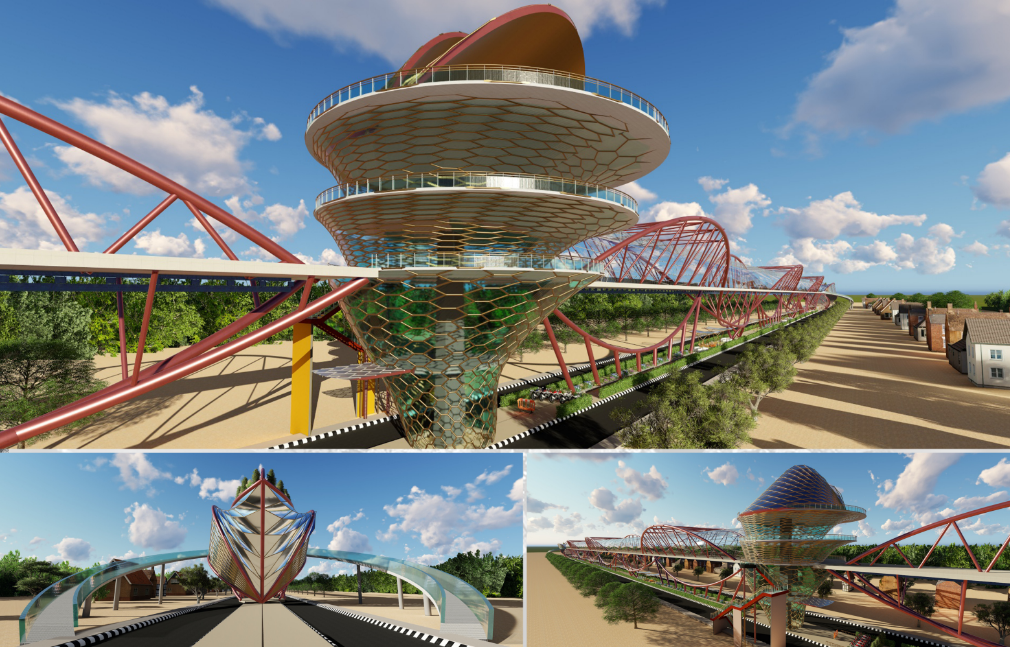
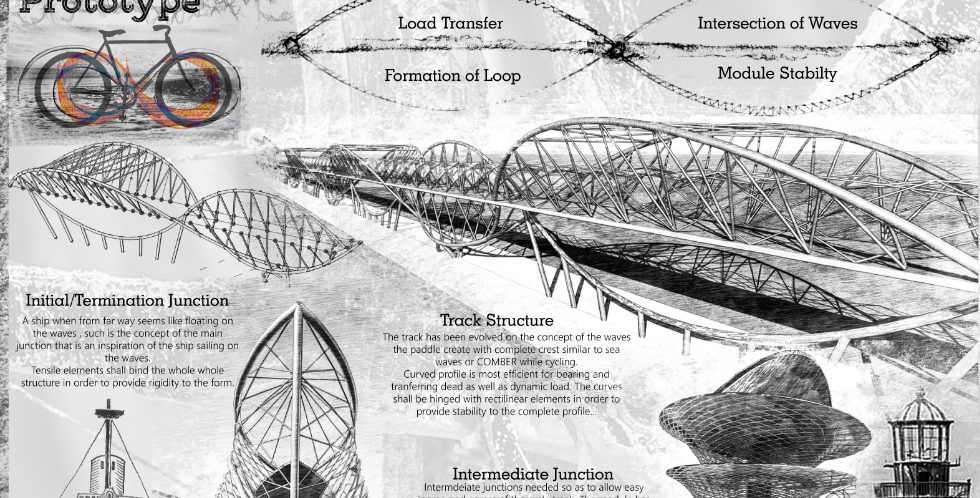
  • Lightweight Steel Truss System: The primary structural element is an intricate steel truss system, forming the base and sides of the elevated track (sh 5 comber.jpg, sh 6 comber.jpg, sh 7 comber.jpg, sh 8 comber.jpg, sh 9 comber.jpg, sh 10 comber.jpg). The open web design of the trusses contributes to a sense of lightness and transparency, allowing light to filter through and reducing visual bulk.

  • Minimalist Column Supports: The track is supported by slender, widely spaced steel columns (sh 5 comber.jpg, sh 7 comber.jpg, sh 8 comber.jpg). These columns appear to be designed for minimal impact on ground-level activity and urban flow.

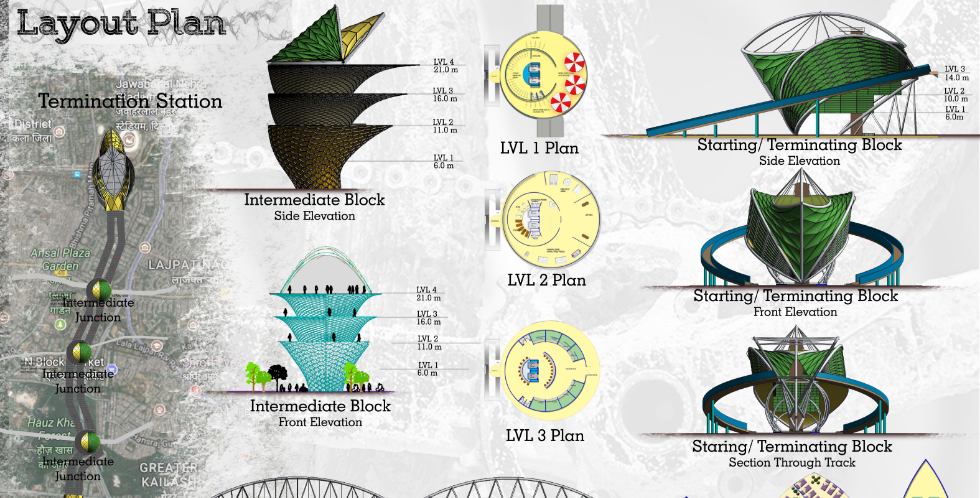
  • Integrated Ramps and Access Points: Graceful, sweeping ramps connect the elevated track to the ground level (sh 6 comber.jpg, sh 7 comber.jpg, sh 10 comber.jpg). These ramps are designed to be wide and gently sloped, ensuring easy and safe access for cyclists and potentially pedestrians. The curves of the ramps add fluidity to the overall design.

  • Safety Barriers with Integrated Lighting: The sides of the track feature transparent or semi-transparent barriers, likely made of glass or perforated metal, providing safety without obstructing views (sh 5 comber.jpg, sh 6 comber.jpg, sh 7 comber.jpg, sh 8 comber.jpg). These barriers appear to incorporate linear LED lighting, illuminating the track at night and enhancing safety and aesthetic appeal.

  • Overhead Canopies/Shelters: In certain sections, a light, undulating overhead canopy is incorporated (sh 6 comber.jpg, sh 7 comber.jpg, sh 8 comber.jpg, sh 9 comber.jpg). This could be designed to provide shade from the sun or protection from rain, enhancing the comfort of users. These canopies also add a dynamic sculptural element.

  • Green Integration and Planters: The design includes provisions for integrated planters or green pockets along the track (sh 5 comber.jpg, sh 7 comber.jpg, sh 8 comber.jpg, sh 10 comber.jpg, shq 3 comber.jpg, shq 11 comber.jpg). This biophilic element softens the industrial aesthetic, improves air quality, and creates a more pleasant environment.

  • Interactive / Information Hubs: Elements resembling interactive kiosks or information displays are integrated at access points (sh 10 comber.jpg). These could provide maps, local information, or track-related data.

  • Resting/Viewing Pods: In some renderings (shq 3 comber.jpg, shq 11 comber.jpg), small, cantilevered or integrated pods are visible along the track. These appear to be shaded resting or viewing areas, offering cyclists a chance to pause and enjoy the urban panorama.

  • Clean and Modern Finishes: The predominant material appears to be painted steel in a light, neutral color, possibly white or light grey, giving the structure a clean, modern, and high-tech appearance. The cycling surface itself is likely a durable, non-slip material.

Design Philosophies

The design focuses on a modular and elegant steel structure that minimizes its footprint while maximizing user experience and visual appeal.


  • Sustainable Urban Mobility: The core philosophy is to promote cycling as a viable and preferred mode of transport in Delhi. By creating a dedicated and safe elevated pathway, the project encourages a shift away from motorized vehicles, reducing congestion and pollution.

  • Minimal Environmental Impact: The lightweight steel construction and elevated design minimize the footprint on the ground, preserving existing urban spaces and infrastructure. The open structure allows for natural light and air circulation beneath the track.

  • Aesthetic Integration and Urban Landmark: The design aims to be more than just functional infrastructure; it aspires to be an urban landmark. The elegant curves, integrated lighting, and green elements are designed to enhance the city's aesthetic appeal, making the cycle track a visually engaging addition to the cityscape.

  • User-Centric Design: Safety, comfort, and accessibility are paramount. Wide tracks, gentle ramps, protective barriers, integrated lighting, and potential resting/viewing areas all contribute to a pleasant and secure experience for cyclists of all ages and abilities.

  • Resilience and Durability (Steel Focus): Given its likely context as an INSDAG competition entry (focused on steel design), a core philosophy is to showcase the structural efficiency, durability, and long-span capabilities of steel, ensuring a robust and long-lasting piece of urban infrastructure.

  • Biophilic Design: The integration of greenery throughout the track serves to connect users with nature, even within an urban environment. This promotes well-being and helps mitigate the "concrete jungle" effect.

  • Smart Infrastructure: The potential inclusion of interactive kiosks and smart lighting systems suggests a forward-thinking approach to urban infrastructure, leveraging technology to enhance user experience and operational efficiency.

  • Promoting Active Lifestyles: Beyond transportation, the track serves as a facility for recreation and fitness, actively encouraging healthier lifestyles among city residents.

  • In essence, this Elevated Cycle Track project for New Delhi is a forward-thinking proposal that addresses contemporary urban challenges with an elegant, sustainable, and user-focused design, demonstrating the potential of steel as a material for innovative infrastructure.
Go To Top